


According to international sources, Kyrgyzstan’s water stress index has reached 3.28—a high level approaching pre-crisis levels. The press service of the Ministry of Water and Agriculture reported following a roundtable discussion at which participants discussed the current state of the country’s water resources, prospects for irrigation development, and the formation of a comprehensive investment strategy for the water sector.
It is noted that the republic possesses significant water potential. However, the volumes of guaranteed water resources available for use remain limited and directly impact the development of agriculture, energy, and drinking water supply.
Available water resources of the Kyrgyz Republic:
— Annual river flow of approximately 50 billion cubic meters;
— 14 billion cubic meters of groundwater;
— Nearly 10,000 glaciers;
— More than 45,000 rivers with a total length of approximately 168,000 kilometers.
Almaz Zheenaliev, Deputy Minister of Water Resources, Agriculture, and Processing Industry and Director of the Water Resources Service, presented information on reforms laying the foundation for modernizing the water sector. They include the adoption of the National Water Strategy until 2040, the National Development Program until 2030, a new version of the Water Code, and the Presidential Decree «On Measures for the Further Development of the Agro-Industrial Complex.»

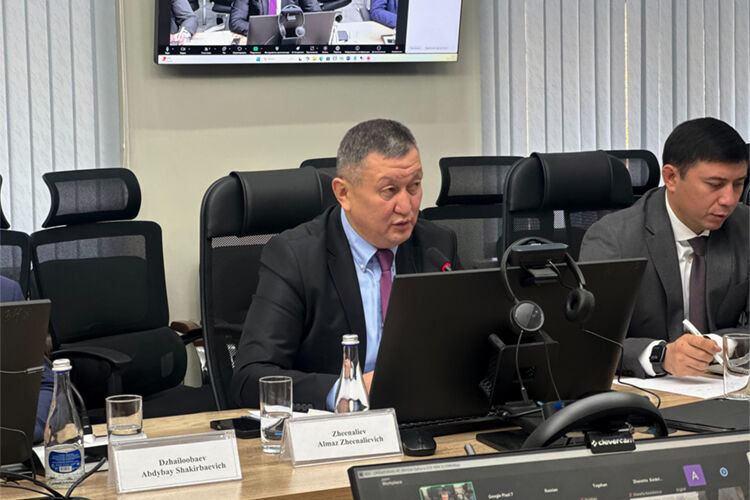
The roundtable participants emphasized that investments should be directed toward the construction and modernization of reservoirs, the reconstruction of irrigation canals, the implementation of water-saving irrigation technologies, the digitalization of water metering, the creation of new monitoring and forecasting systems, the development of climate change adaptation infrastructure, the establishment of a water school, and the training of specialists.
Summing up, the participants noted that the government and international partners share a common position on water sector development priorities. Joint efforts will strengthen the economy’s resilience to climate risks and contribute to water and food security in the Kyrgyz Republic.